When an urban tree comes down due to storms, pests, disease, development, or routine care, its story need not end. Through our Transforming Wood Waste initiative, Tree Trust transforms removed trees into useful products, while providing hands-on career training for young adults, and supporting healthier community forests. While wood waste was once treated primarily as a disposal problem, it can now be upcycled instead to become mulch, tree stakes, lumber or building materials, and other resources that continue to serve the community.
The Challenge of Wood Waste Management
Tree Trust Landscape Services generates 10,000 to 15,000 cubic yards of woody material each year from tree removals, pruning, pest management, and storm response. The volume and need for waste management solutions is expected to grow as Emerald Ash Borer continues to spread and urban forestry needs increase. Yet communities and tree care companies often lack the equipment, infrastructure, partnerships, and reliable markets needed to process large logs, branches, wood scraps, and other material beyond ordinary wood chips. As a result, usable wood may be burned, buried, or underused. Funding from the Minnesota Pollution Control Agency (MPCA) has helped Tree Trust acquire resources and begin converting more of this material into products with local value.
 Connecting Tree Trust’s Mission
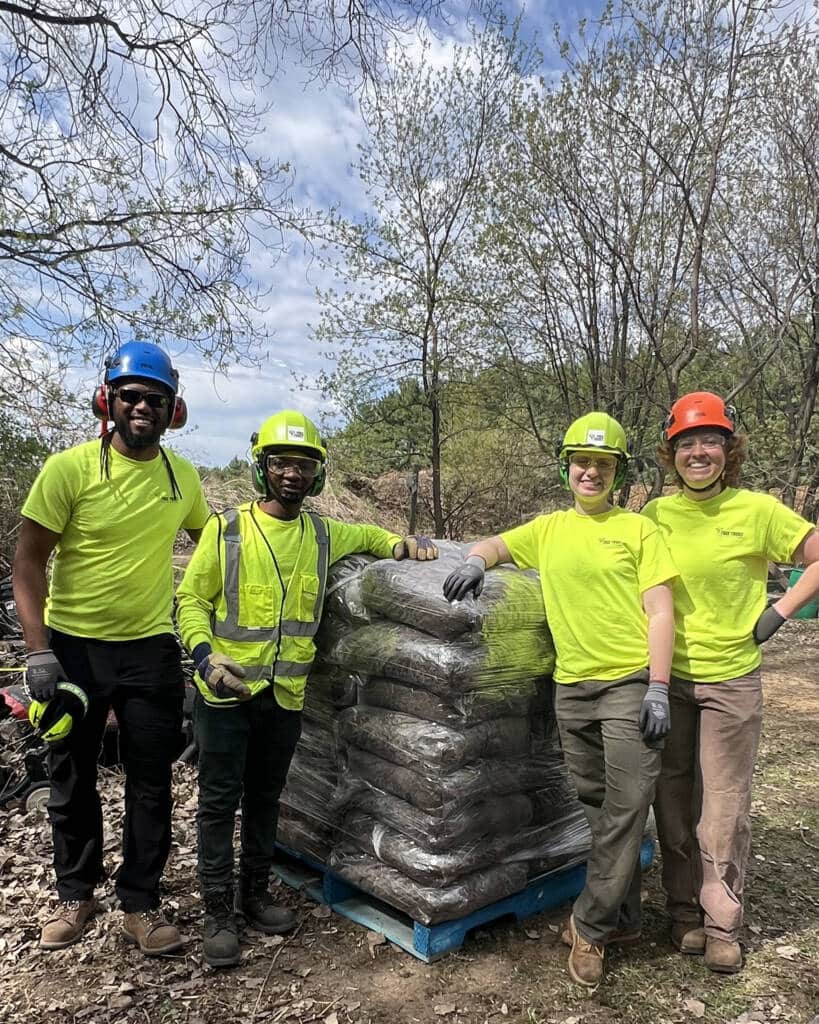
The initiative is a natural extension of Tree Trust’s mission to transform lives and landscapes, bringing all three program areas together. Tree Trust Landscape Services recovers wood from tree care operations. Career Pathways trainees gain hands-on experience processing the material and making products. Community Forestry uses those products to support tree planting and stewardship. Partners such as the Shakopee Mdewakanton Sioux Community and Dakota Prairie Composting help Tree Trust grind woody material into mulch or prepare it for other uses. Together, Tree Trust’s programs and partners create a cycle in which removed trees continue to serve the region long after they leave the landscape.
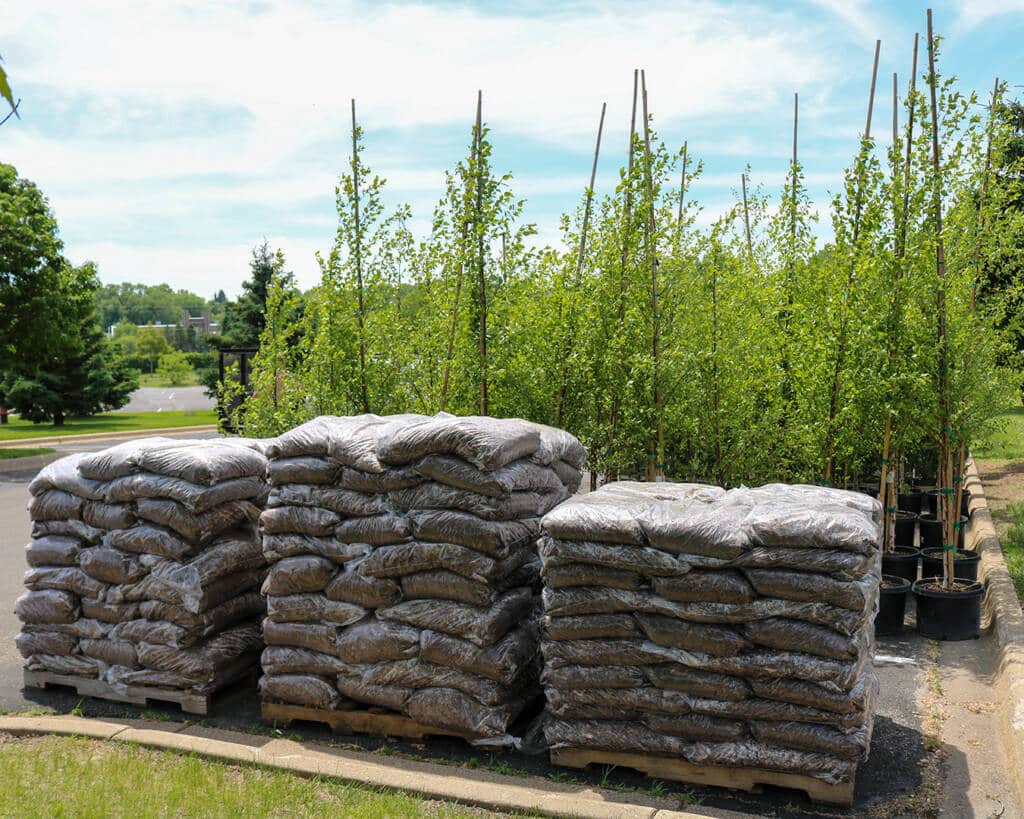
Recovered wood can be processed into bagged mulch, tree stakes, rough-sawn lumber, and future specialty or building products. These materials already serve an immediate local need. Tree Trust plans to plant about 8,000 trees annually in parks, schools, neighborhoods, and other public spaces. Those newly planted trees require thousands of bags of mulch and hundreds of stakes. Producing them from recovered urban wood creates a more sustainable local supply and helps newly planted trees establish and thrive.
As the initiative grows, Tree Trust is exploring commercial partnerships and opportunities to accept suitable material from municipalities and other organizations, reducing waste and expanding the supply of recovered wood that can be put to productive local use.
Skills for Careers, Benefits for Communities
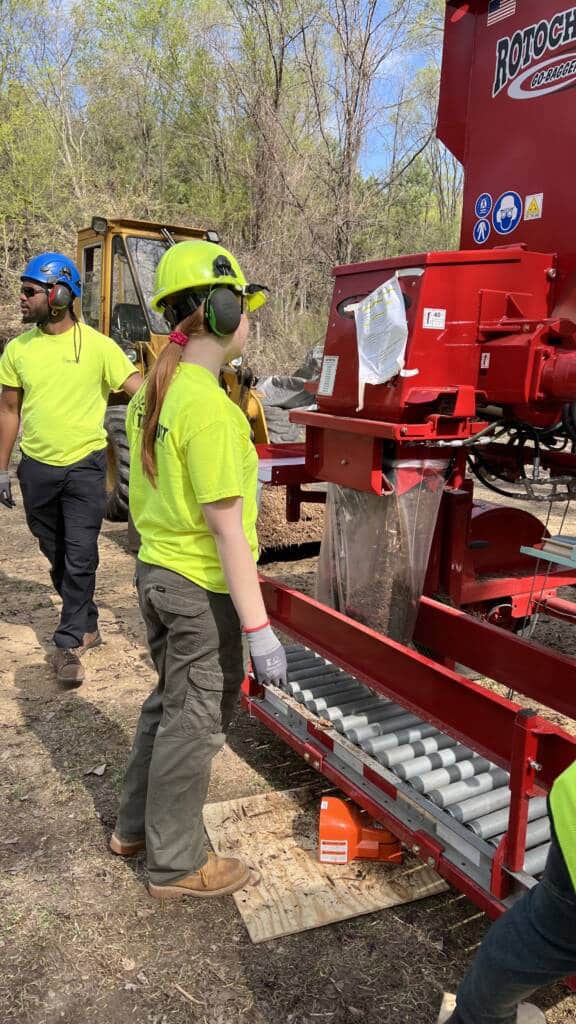
Career Pathways trainees operate equipment, learn material processing, product manufacturing, and workplace safety. These skills apply to careers in arboriculture, landscaping, forestry, manufacturing, and construction. Many trainees face barriers to employment, education, or advancement and benefit from hands-on learning connected to real community needs. Through this work, they build technical ability, confidence, and familiarity with industry standards while pursuing credentials in areas including arboriculture safety, tree inspection, and workplace safety.
Supporting Healthy Urban Forests
The products extend a tree’s benefits after removal. Mulch conserves moisture, moderates soil temperature, suppresses weeds, and improves soil around new trees. Stakes provide stability as trees establish root systems. Local reuse can also reduce landfill transportation and disposal costs, and pollution caused by open burning. When recovered wood becomes a durable product, it can keep carbon stored longer. In this way, material from trees at the end of their lifecycle helps support the next generation of the urban canopy.
When a tree is removed, its value does not disappear. It can be upcycled as mulch for a newly planted tree or construction lumber for a community project, while also being a training opportunity that helps a young person begin a career. By recovering, repurposing, and reinvesting urban wood, Tree Trust is taking on a wood waste management challenge by advancing a simple idea with lasting impact: every tree has more to give.