

Autumn Arborist: Fall Tree Care
As the vibrant remnants of autumn leaves gently cascade to the ground, it’s time to prepare your trees for the cooler months ahead. Deciduous trees survive the winter months by going dormant, much like hibernation. Before your newly planted or established deciduous trees go dormant, learn about the important steps to take to ensure they will happily leaf out in the spring. While evergreen trees do keep their color, they will also benefit from some fall TLC. Here are five fall tree care tips to prepare your well-loved trees for the most beneficial winter sleep.
Water Your Trees
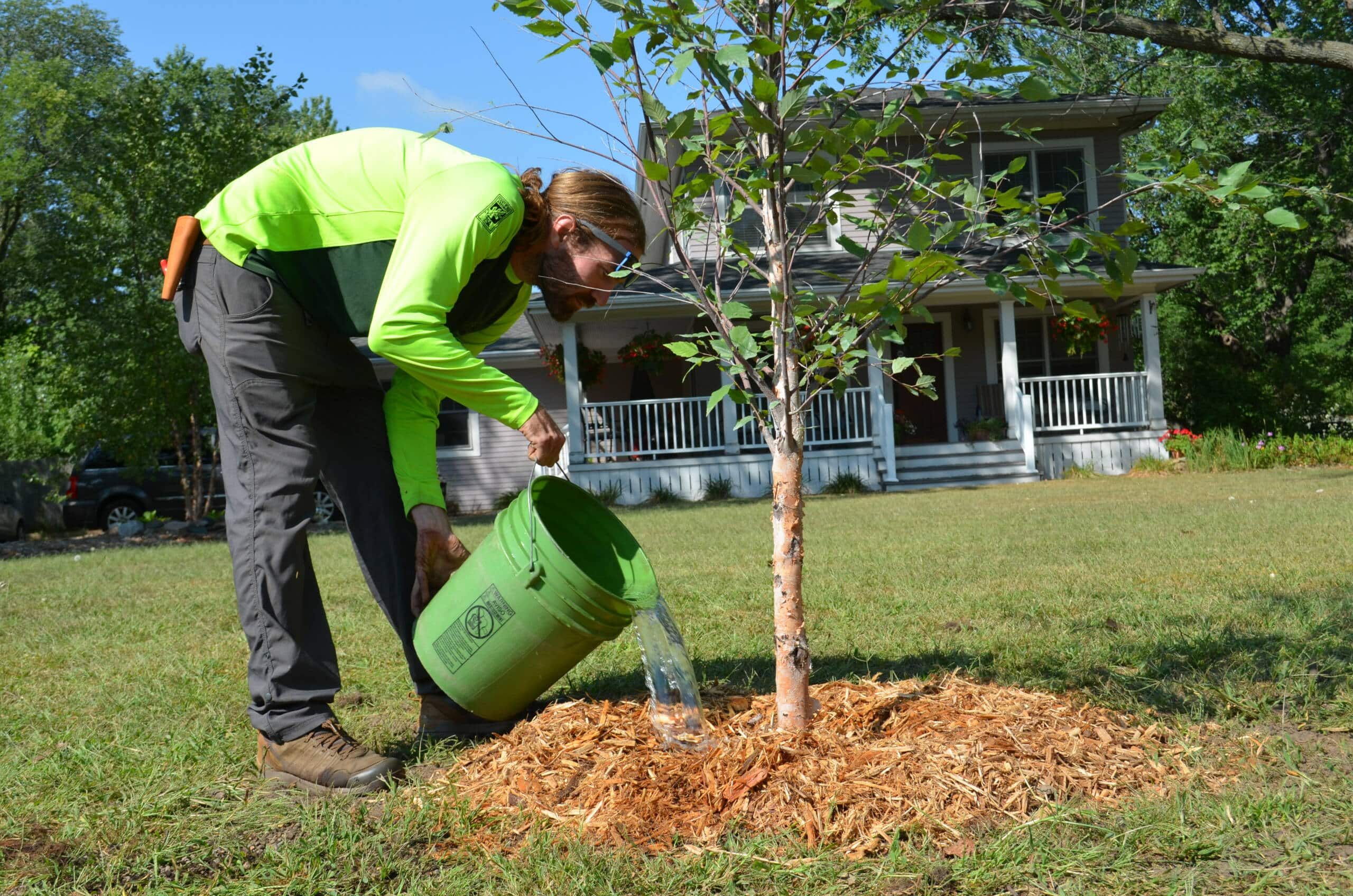
Trees benefit from regular watering until the ground is fully frozen. Slow, deep watering with a hose is a great way to prepare your trees for the winter ahead. Even if you have turned off your hose for the season it is important to keep your trees properly hydrated until the soil is fully frozen. Watering with a five-gallon bucket works too. Pour water evenly around the inside of your tree’s mulch rings, until there is a full freeze. Adequate water provides much-needed hydration to maintain healthy trees through both dormant and growing seasons.
Fertilize Your Trees
Urban trees thrive with extra nutrients provided by slow-release fertilizers. Trees growing in forests have a nutrient-rich forest floor including natural organic decomposition. City trees, however, face the challenge of environmental hazards like pollution and salt. By simply adding fertilizer to the base of your trees, you can make sure they have the fuel needed to safely sleep through a Minnesota winter. Fall is the perfect time to fertilize your trees.
Freshen Up Your Mulch Donut
A mulch “donut” is a tree’s best friend. A layer of mulch encircling a tree, but a few inches away from the trunk, provides moisture protection and helps insulate the soil around tree. Mulch will eventually break down into nutrients that can help the tree grow. This fall, take inventory of each mulch donut and make sure it is three inches deep, three inches wide, and three inches away from the base of the tree. If your mulch rings need more volume, add an extra layer of high-quality organic mulch or wood chips. Come spring, your trees will thank you.

Rake Away Leaves
Wet leaves piling up at the base of your tree can cause mold or fungal disease, which leads to unhealthy conditions for your tree. Leaves do eventually turn into nutrient-rich compost, however this process does not happen overnight, and it’s best to rake leaves away from the base of your trees. Try jumping into a pile of them before you bag them up or add raked leaves to an established compost pile.
Take Visual Inventory
Autumn offers a perfect time for a visual inspection. Check your trees for any dead branches or animal damage. Look for pests or inconsistencies in the bark. A visual inspection helps catch any potential ailments before they become major problems. Tree Trust’s professional arborists recommend pruning for most trees in the winter months.
Autumn is a great time to schedule any needed winter tree maintenance. Call our Landscape Services team to schedule an appointment with an expert arborist if you discover any concerning issues with your trees.
Taking these important steps will help ensure your trees have a healthy winter season.
(Last updated October 8, 2026)